
Why Page Targeting Matters
When users arrive from different platforms such as Naver Blog, Instagram, or YouTube, their behavior patterns and expectations vary significantly. Guiding them to the same destination page can create a mismatch in expectations and disrupt the content flow.
In such cases, bounce rates after clicking may increase, and the value of each click may decrease. This is why Vivoldi’s Page Targeting feature plays a crucial role by detecting where the link was clicked and routing users to the most suitable destination.
In environments where a single URL is distributed across multiple platforms, managing links often becomes complicated. Creating separate URLs for each platform scatters click data and makes it harder to analyze campaign performance at a glance. However, with Page Targeting, a single URL can be used across all platforms while automatically sending users to different pages based on their entry source, leading to significantly improved marketing efficiency.
This feature is particularly effective for platforms with clearly distinct characteristics — Naver Blog, where users often arrive via search; Instagram, where emotional and visual reactions are critical; and YouTube, where detailed information delivery is important. Understanding each platform’s user flow and presenting information tailored to it is essential for improving conversion rates and enhancing brand trust.

User Behavior Patterns by Platform
Users arriving from Naver Blog often discover content through search results and tend to prefer detailed information and comparative analysis. For these users, destination pages focused on “information delivery,” such as service introduction or usage guides, feel natural.
In contrast, Instagram is a fast-paced, visually driven platform where visitors respond strongly to messages that encourage immediate action. For Instagram traffic, promotion pages or limited-time event pages that encourage quick participation work particularly well.
Users who click a link after watching a YouTube video often already have a good understanding of the product or feature. They may want more in-depth information or may be ready to try the service themselves. Therefore, for YouTube traffic, guiding users to tutorial pages, detailed feature descriptions, or sign-up pages helps maintain a natural user flow.
Because the purpose and behavior patterns of users differ across platforms, guiding them to the right page based on where they came from creates a smoother post-click experience and reduces bounce rates. This natural flow ultimately improves conversion rates and increases overall user satisfaction.
How Page Targeting Works
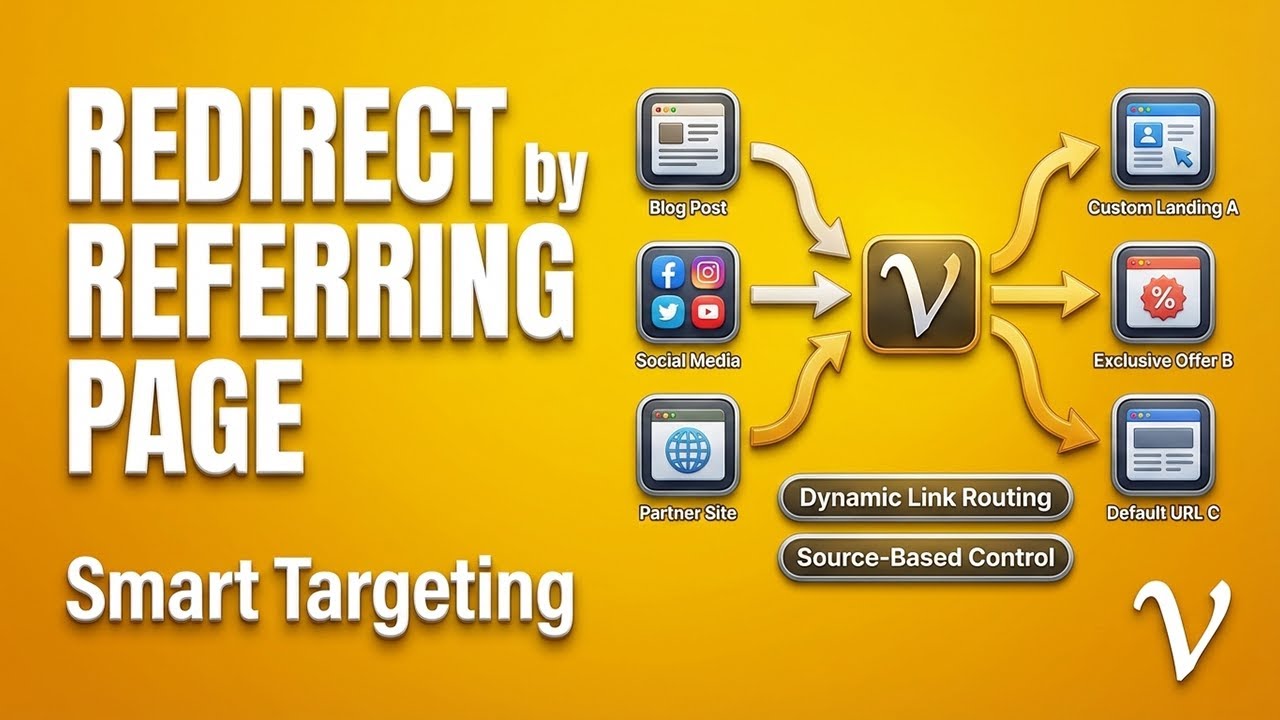
Page Targeting operates based on the Referrer URL information that is passed when a user clicks a link. By analyzing this information, Vivoldi determines whether the user clicked from Naver Blog, Instagram, or YouTube.
Vivoldi then applies detailed rules to route traffic from each platform to different destination pages.
For example, if the referrer contains blog.naver.com, it is classified as Naver Blog traffic and users can be directed to an information-focused page. If the referrer contains instagram.com, the system detects Instagram traffic and sends users to an event or promotion page.
Using referrer-based conditions makes it easy to clearly distinguish each platform’s traffic, and you can set up multiple destination pages within a single short URL without creating separate URLs.
Page Targeting can also interpret whether users clicked from a web browser, app, or in-app browser, enabling more advanced routing strategies. For example, if payment pages do not work smoothly in an in-app browser, users can first be guided to a “Open in Browser” instruction page to improve the overall experience.
In this way, Page Targeting is not simply splitting URLs — it is a smart routing system that interprets user environments and guides them smoothly to the optimal destination.

Unified Analysis with a Single Link
Another strength of Page Targeting is that all click data is consolidated under a single short URL.
If separate URLs are used for each platform, click data becomes scattered, making comparisons more difficult. With Page Targeting, platform-specific traffic such as Naver Blog, Instagram, and YouTube can be analyzed within one link.
This unified data makes it easier to understand the overall campaign flow and compare which platform leads to higher conversion rates depending on the destination page. Such insights greatly help in planning future marketing strategies.
For instance, if Instagram traffic shows the highest conversion for a particular promotion page, the next campaign could focus more on Instagram-optimized content.
Ultimately, Page Targeting provides a structural foundation for crafting highly refined, data-driven marketing strategies, while improving operational efficiency.
Practical Page Targeting Strategies
Page Targeting can be applied across many industries and scenarios. For example, when promoting a new product, a store owner may publish detailed reviews on Naver Blog, upload visually appealing posts on Instagram, and share functional demonstration videos on YouTube.
By placing the same short URL across all platforms and setting Page Targeting, each platform’s audience will be routed naturally to the most fitting destination page.
Another example: users from online communities or forums often prefer detailed information and user reviews. These users may benefit more from informational pages rather than purchase pages. Meanwhile, users coming from advertisements are often already in a high-intent stage, so guiding them to a discount or limited-time promotion page can dramatically improve conversion.
Such strategies provide a persuasive and seamless user experience by aligning user expectations with the landing page. When the destination matches what users expect, trust in both the content and the brand increases significantly.

Advanced Use Case: In-App Browser Optimization
Page Targeting is particularly practical because it can also consider in-app browser environments for platforms like Instagram and Facebook. Some in-app browsers restrict functionalities or have issues with payment pages.
Sending users directly to a checkout page in this environment may result in a poor experience.
In such cases, users arriving through an in-app browser can first be guided to a dedicated instruction page with messages like “For smooth payment, please open this page in your browser.” After clicking a button, users can switch to their device’s default browser, significantly reducing drop-offs.
This approach offers a more refined user experience by carefully interpreting user behavior — a key aspect of advanced marketing strategy.
Vivoldi’s Page Targeting combines entry platform + browsing environment + user behavior, offering remarkable flexibility in crafting optimized pathways.
How to Set Up Page Targeting in Vivoldi

Setting up Page Targeting in Vivoldi is simple and does not require technical knowledge. First, create a short URL and enable the Page Targeting option. Then add referrer-based rules for each platform.
For example, you may enter blog.naver.com for Naver Blog, instagram.com for Instagram, and youtube.com for YouTube.
Next, assign destination URLs for each rule. Naver Blog users can be routed to informational pages, Instagram users to promotion pages, and YouTube users to tutorials or sign-up pages. Everything operates under a single short URL, and routing happens automatically once the rules are set.
You can update or modify the conditions at any time, making it easy to adjust for seasonal promotions or campaign changes.
Below is a video guide explaining Page Targeting in more detail. Watching it will help you understand the screen layout and setup process more clearly.
Thank you.


