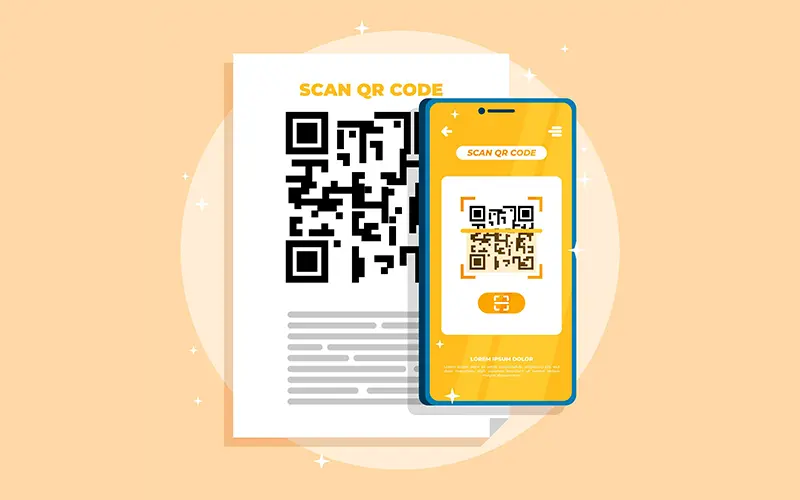
QR codes have become ubiquitous in the digital age. From advertisements to product packaging, you can spot these square-shaped codes almost everywhere. But what exactly are QR codes, and how can you unlock their full potential?
In this comprehensive guide, we’ll walk you through everything you need to know about QR codes—from what they are and how they work to practical tips for using them in real-world scenarios.
Whether you’re a business owner, a marketer, or simply a curious individual, this guide will help you recognize and harness the power of QR codes. Dive right in and discover the endless possibilities of QR codes!
You’ll also find great insights in our related article, “The Ultimate Guide to Successful QR Code Marketing.”
1. What Are QR Codes and Why Do They Matter?
Short for Quick Response code, a QR code is a two-dimensional barcode capable of storing various types of information.
It consists of a distinctive pattern of black squares and dots arranged on a white background. When scanned using a smartphone camera or a dedicated QR code reader app, these codes can direct users to a specific website or web page, or trigger a designated action.
Why do QR codes matter? They offer a wide range of benefits for both businesses and individuals.
First, QR codes provide a fast and effortless way to engage with digital content. With a single scan, users can be instantly redirected to detailed information, exclusive discounts, or downloadable content.
Second, QR codes enable businesses to track user interactions and collect valuable data. This allows marketers to gain insights into customer behavior, tailor marketing efforts, and improve overall campaign performance. Finally, QR codes offer a contactless, hygienic solution—especially valuable in times when minimizing physical contact is important.
In the following sections, we’ll explore how QR codes are used across a variety of real-world situations. From marketing and advertising to event management and customer service, you’ll discover practical ways to integrate QR codes into everyday life. Stay tuned to uncover the limitless potential of QR codes!
2. Using QR Codes for Marketing Purposes

In today’s digital era, an effective marketing strategy is vital to the success of any business. QR codes have emerged as a powerful marketing tool, offering endless opportunities to connect with customers and drive sales.
One of the main advantages of using QR codes in marketing is their ability to deliver interactive, immersive experiences to consumers. Simply by scanning a code, customers can access additional product details, watch promotional videos, or enter contests and giveaways. This not only boosts customer engagement but also creates memorable, personalized experiences.
You can also use QR codes to drive traffic to your website or social media platforms. Integrating QR codes into print ads or product packaging seamlessly bridges the offline and online worlds, making it easy for customers to visit your online channels and explore your offerings.
QR codes are equally effective for collecting customer feedback and reviews. Placing QR codes on receipts, product packaging, or customer service desks encourages customers to share valuable feedback that helps improve your products or services.
Create various types of QR code links on Vivoldi and put them to work in your marketing.
Create a QR Code Now
In the next section, we’ll take a closer look at how QR codes can elevate your marketing efforts. Learn how to leverage these codes to increase brand visibility, connect with customers, and achieve your marketing goals.
3. Enhancing Customer Experience with QR Codes
In today’s fiercely competitive market, enhancing the customer experience has become a top priority for businesses. With the help of QR codes, you can take your customer experience to the next level.
QR codes give customers a convenient and efficient way to access extra information about products or services.
For instance, placing QR codes on storefronts or packaging lets customers quickly scan to check product specifications, read customer reviews, or watch tutorial videos. This saves time while giving shoppers useful details to make informed purchasing decisions.
You can also use QR codes to deliver personalized experiences. By integrating QR codes into loyalty or rewards programs, customers can effortlessly earn points or redeem discounts by scanning a code at checkout. This adds an element of gamification to the shopping journey while boosting customer loyalty and satisfaction.
In the following section, we’ll explore even more practical ways QR codes improve business workflows and customer interactions. From virtual try-ons to interactive surveys, the possibilities are vast. Keep reading to see how you can harness QR codes to build memorable, engaging experiences.
4. Leveraging QR Codes for Streamlined Operations

Beyond enhancing the customer experience, QR codes can significantly streamline business operations. Implementing QR codes across different areas of your business helps optimize workflows and improve overall efficiency.
One effective way to streamline operations with QR codes is integrating them into your inventory management system. Assigning a unique QR code to each product makes it easy to track stock levels, monitor inventory movement, and simplify reordering processes. When an item is sold or restocked, scanning the QR code updates the system in real time—eliminating manual data entry and reducing the risk of human error.
QR codes can also simplify check-in and check-out procedures, particularly for service-based businesses like hotels and rental companies. Providing guests or customers with a reservation QR code allows them to scan it at a designated kiosk or device to complete required paperwork or payments. Without lengthy forms or long queues, both staff and customers enjoy a smooth, efficient process.
Furthermore, QR codes support employee management in multiple ways. For example, generating QR codes on employee ID badges simplifies access control and attendance tracking. QR codes also enable contactless time tracking, allowing staff members to clock in and out simply by scanning a code with their smartphones.
Incorporating QR codes into daily operations saves time, cuts costs, and boosts operational efficiency. Next, let’s explore how QR codes unlock tremendous potential in the e-commerce sector to connect with shoppers and accelerate business growth!
5. Unlocking the Potential of QR Codes in E-Commerce
QR codes are rapidly gaining popularity in the e-commerce industry thanks to their ability to bridge the gap between physical and digital touchpoints. Integrating QR codes into your online store operations can elevate the shopping experience and drive higher sales.
One practical application of QR codes in e-commerce is providing comprehensive product details and reviews. Instead of overcrowding packaging with text or cluttering product pages, a QR code can guide shoppers to a dedicated landing page featuring full specifications, verified buyer reviews, and user-generated content. This creates a clean browsing experience and empowers customers to buy with confidence.
QR codes are also ideal for personalized promotions and discounts. Placing QR codes inside shipping boxes or packaging inserts encourages customers to scan for exclusive discounts or loyalty rewards. Not only does this add excitement to the unboxing experience, but it also provides a strong incentive for repeat purchases and long-term brand loyalty.
Additionally, QR codes can simplify the checkout process for online shoppers. Integrating QR codes into payment gateways allows customers to complete transactions quickly and securely by scanning a code rather than typing payment details manually. This minimizes input errors while offering a fast, convenient payment option.
Ultimately, QR codes hold immense potential for e-commerce businesses—delivering richer product information, tailored promotions, and frictionless online shopping experiences.
6. QR Codes in Healthcare and Safety Protocols

Beyond e-commerce and marketing, QR codes have proven to be invaluable tools in the healthcare sector and safety protocol management. Medical facilities use QR codes to streamline clinical workflows and enhance operational accuracy.
A primary use case in healthcare is patient identification and record management. Medical staff can scan a QR code on a patient’s ID wristband or medical chart to quickly retrieve vital records—including medical history, allergies, and current medications. This reduces the risk of clinical errors and ensures accurate, up-to-date information is immediately accessible.
QR codes have also transformed contact tracing during public health emergencies. Placing QR codes at venue entrances or on event tickets enables visitors to check in effortlessly and submit contact details when needed, supporting rapid and reliable exposure notifications.
Moreover, QR codes play an important role in communicating safety guidelines to the public. Including QR codes on signage, posters, or wearable passes lets individuals scan to access essential hygiene protocols, occupancy guidelines, or venue-specific safety instructions.
As the healthcare industry continues to advance and prioritize patient safety, QR code adoption will undoubtedly continue to expand. Next, let’s examine how QR codes are transforming event management and ticketing.
7. QR Codes in Event Management and Ticketing

Alongside healthcare, QR codes are revolutionizing event management and ticketing workflows. From concerts to conferences, organizers rely on QR codes to speed up check-ins and elevate the attendee experience.
Instead of relying on paper tickets or long registration lines, event organizers can generate a unique QR code for each ticket holder. Attendees simply present their QR code at the entrance for a quick, contactless scan via smartphone or dedicated scanner. This saves time, cuts wait lines, and offers an eco-friendly alternative by eliminating paper ticket printing and handling.
QR codes also give event organizers valuable insights into attendee behavior and preferences. By tracking QR code scans, organizers can gather data on attendance rates, popular sessions, and audience demographics. These insights help inform future event planning—from selecting keynote speakers to optimizing floor layouts around attendee traffic.
Inside the venue, QR codes can unlock exclusive content or special perks for attendees. Scanning QR codes displayed at booths or on promotional banners lets visitors download session materials, claim special discounts, or enter on-site giveaways.
In short, QR codes have become indispensable to modern event management—enabling fast check-ins, actionable data collection, and richer attendee engagement. In the next section, let’s look ahead at the future of QR codes and emerging technology trends!
8. The Future of QR Codes and Emerging Trends
As we’ve seen across previous sections, QR codes have already proven their value across healthcare, e-commerce, and event management. Yet their potential extends much further, with brands increasingly adopting advanced QR code strategies to capture attention and drive conversions.
In a world where consumers are constantly bombarded with advertising messages, QR codes offer a direct, clutter-free way to capture interest and deliver instant value. A quick scan gives shoppers immediate access to product specs, pricing, and reviews—or lets them complete a purchase right on their smartphones.
Looking ahead, the future of QR codes goes far beyond basic information delivery. Advances in technology are paving the way for far more interactive and personalized QR experiences. For instance, brands can pair QR codes with augmented reality (AR) to overlay virtual content onto the real world upon scanning—adding excitement while creating unforgettable brand interactions.
Alongside AR, deeper integration between QR codes, voice assistants, and Internet of Things (IoT) devices is on the horizon. Imagine scanning a QR code on product packaging to ask your voice assistant to reorder an item, or receiving tailored product recommendations based on your purchase history.
The possibilities are truly limitless, and as technology continues to evolve, real-world applications for QR codes will only expand. Whether you’re an event organizer, marketer, or business owner, staying up to date with the latest QR code trends and innovations is key to staying ahead.
9. Conclusion: Embracing QR Codes in the Digital Age

QR codes have become an indispensable tool across diverse industries and have rapidly established themselves as a mainstream marketing staple. As explored throughout this guide, QR codes offer a versatile way to engage audiences, share information instantly, and drive measurable conversions.
With ongoing technological advancements, the future of QR codes looks brighter than ever. From augmented reality to seamless integration with voice assistants and IoT devices, the opportunities to deliver personalized, interactive experiences are endless. By keeping pace with emerging trends and innovations, event organizers, marketers, and business owners can fully harness the power of QR codes in the digital era.
Create QR code links for URLs, plain text, email, Wi-Fi, phone numbers, SMS, and more on Vivoldi, and put them to work in your everyday life or marketing campaigns.
Thank you.


